
If we imagine MATIK as a large chain, tracks are the links that connect it. All user transactions pass through these tracks.
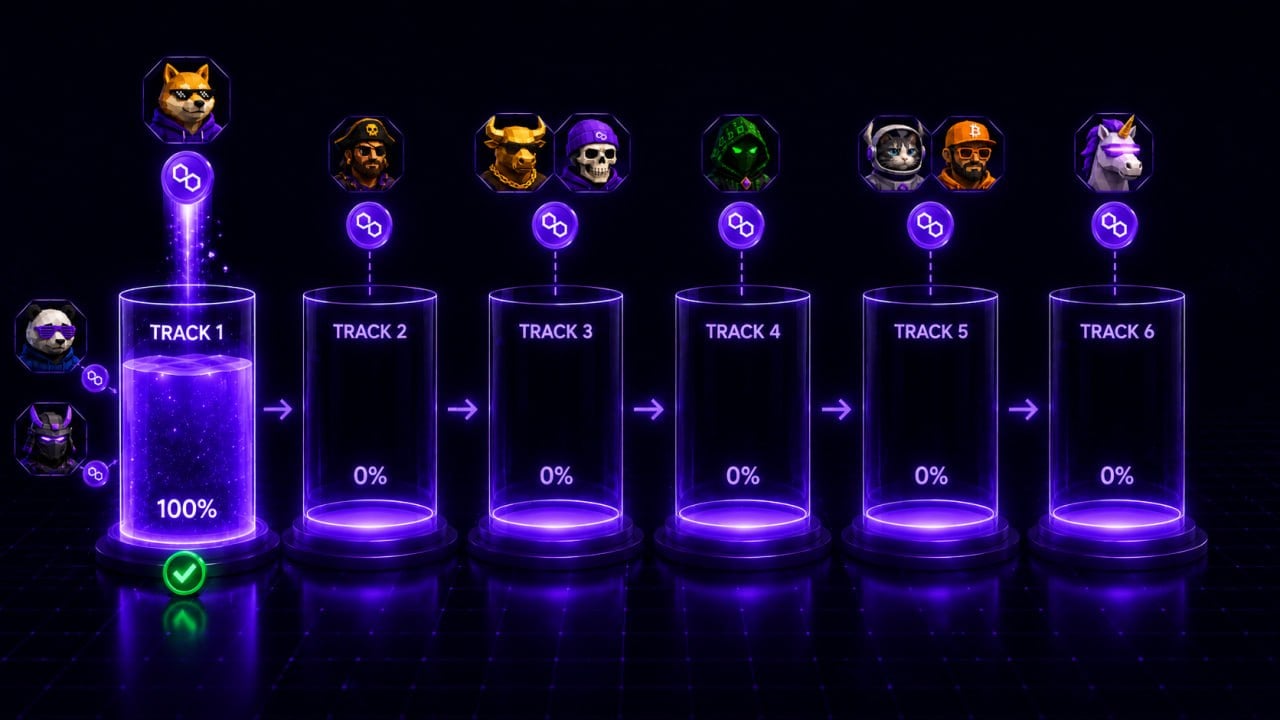
Each track has a predefined liquidity capacity. Until this capacity is fully reached, the track remains open for new transactions. Once a track is completely filled, the system automatically moves on to the next one. This creates a sequence of tracks through which the entire system gradually progresses.How Does It Work?
Let’s imagine that the first track has a capacity of 100 POL. If the first user creates a transaction of 20 POL, the track still has 80 POL of available capacity. Other users then join and continue filling the same track. When the total value of transactions in the track reaches 100 POL, the track is considered fully filled. After that, new liquidity begins flowing into the next track.Do I Need to Choose a Track Myself?
No. Users do not need to decide which track to enter. The protocol automatically allocates the liquidity from each transaction to the currently open track. If a transaction exceeds the capacity of a single track, the system automatically distributes it across several consecutive tracks. The entire process takes place without any manual action from the user.Why Are Tracks Used?
Tracks help organize the flow of liquidity within the protocol. Thanks to their sequential structure, the system always knows:- Which transactions are already being processed.
- Which tracks have been completely filled.
- Which conditions have already been met for future rewards.